Right now, around one in five people in Malta is aged 65 or over. According to projections shared at the recent A Caring Nation conference in April, that figure is expected to rise to approximately one in three by 2060. At the same time, the country’s old-age dependency ratio - the number of people aged 65+ compared to those of working age to support them - is projected to almost double over the same period, skyrocketing from around 30 per cent today to as much as 65 per cent by 2070.
This isn’t a problem for the next generation to solve; it’s a challenge that healthcare providers, care homes, policymakers, and businesses are already beginning to confront. As Dr Steve Agius, CEO of Active Ageing and Community Care at the Ministry of Health and Active Ageing, notes, "Malta is facing a significant demographic shift, with increasing demand for healthcare and elderly care services at a time when human and operational resources remain under pressure."
As a main sponsor of A Caring Nation, digital health and care specialist HLL was among the key stakeholders participating in discussions about what Malta’s future of care could look like, and how technology can help the country respond to rising demands without compromising quality of care.
The data driving these conversations draws on projections from sources such as the National Statistics Office, the European Commission’s Ageing Report, Malta’s National Strategic Policy for Active Ageing and analysis from Chris Meilak, Partner at EY Malta. While individual forecasts may vary, the overall direction is clear: Malta’s population is ageing rapidly, and the pressure on healthcare systems is set to increase significantly over the coming decades.
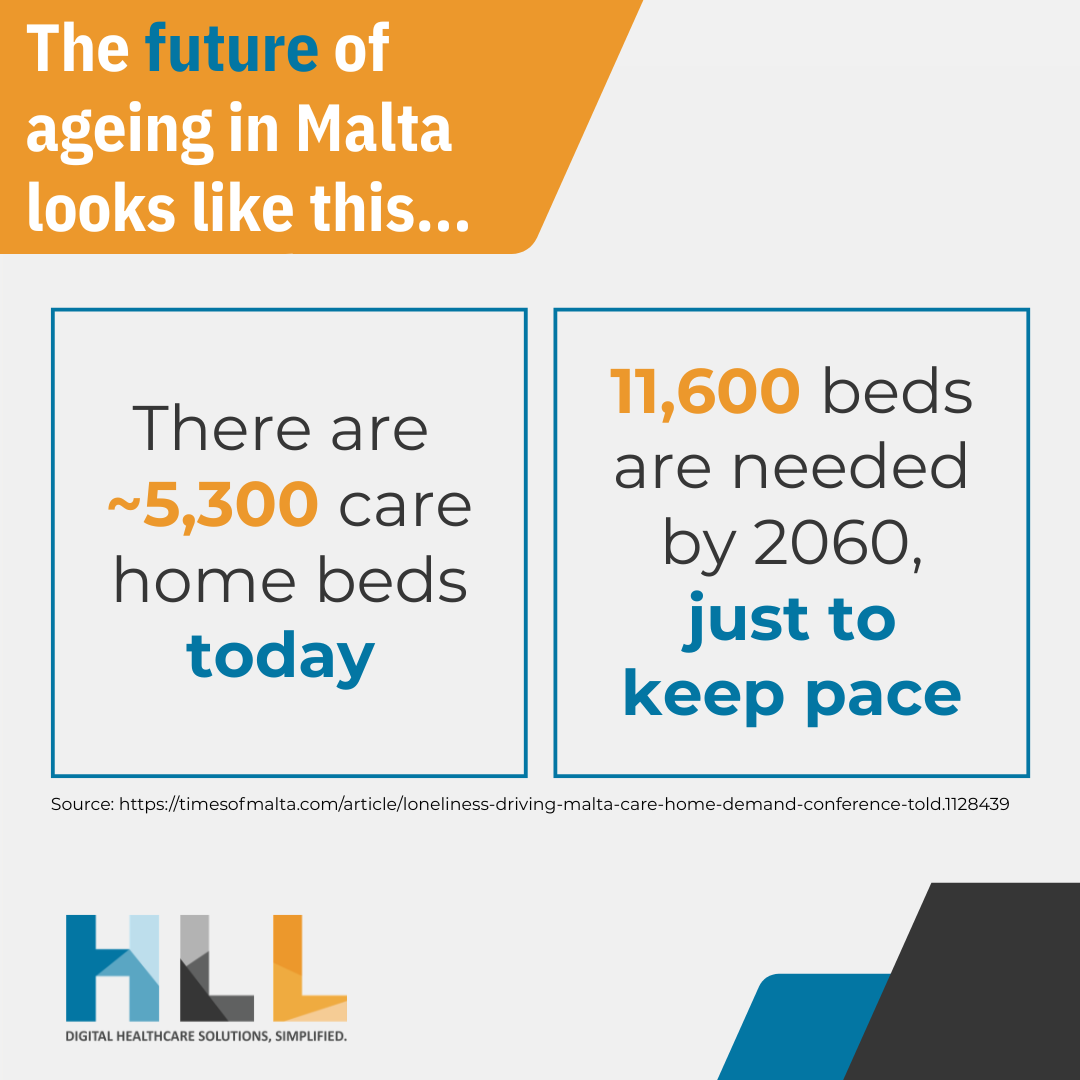
One of the most telling projections relates to Malta’s oldest residents. National policy documents anticipate that the population aged 80+ could triple within the next 30 years. This age group typically requires greater levels of healthcare support, long-term care services, and ongoing monitoring of chronic conditions. Equally significant is the projected shortfall in elderly care home capacity. As reported in the Times of Malta on May 14th 2026, the number of beds in elderly care residences currently stands at approximately 5,300 and will need to grow to approximately 11,600 by 2060, simply to keep pace with current demand.
The implications of these statistics are significant. Malta cannot simply build more facilities or recruit staff to work its way out of the challenge. As demand for care grows faster than the workforce available to provide for it, the country will need new approaches that enable care teams to work more effectively while maintaining quality, dignity, and personal connection.
Against this backdrop, industry stakeholders increasingly view digital health technology as a practical necessity. Dr Agius stresses that "the narrative around ageing and care also needs to evolve. The discussion cannot focus solely on technology, but rather on how we redesign care systems around dignity, independence, prevention, inclusion, and quality of life."
Importantly, healthcare providers do not view technology as a replacement for healthcare professionals or carers. Instead, they believe it should be utilised to help healthcare systems work more effectively through earlier intervention, improving coordination between providers, and supporting people to remain independent for longer. This aligns with Dr Agius’s assertion that "technology should never be viewed as a replacement for human care, empathy, or professional judgement. The future of care must remain person-centred."
This is where companies such as HLL are expected to play an increasingly important role - not by replacing care, but by helping providers deliver more effective care with the resources available to them. For more than two decades, HLL has supported Malta’s healthcare sector through digital transformation initiatives spanning critical hospital solutions, care management systems, nurse call technologies, and digital health devices designed to improve operational efficiency and quality of life - all supported by future ready solutions. HLL’s goal is to enable care teams to spend less time navigating cumbersome manual systems and administrative processes, and more time focused on residents and patients. By reducing administrative friction and improving access to real-time information, their solutions help ensure that the right information reaches the right people at the right time, supporting safer, more efficient, and more proactive care.
As healthcare systems become more complex, these key factors will become increasingly valuable. Consider an older person living in a care home, supported by nurses, carers, medical, and management staff. Every day generates important information - from care plans and medication administration, to observations, assessments, and wellbeing checks. When that information is fragmented across multiple systems or paper records, valuable time is lost on administration and coordination.
Digital resident management platforms, such as HLL’s flagship solution REVO, help bring these moving parts together, giving care teams a clearer, real-time view of each resident's needs. By helping organisations meet regulatory requirements, reducing operational friction, and improving communication, solutions like REVO help give staff more time for what matters most: human connection, personalised care, and a better quality of life for residents.
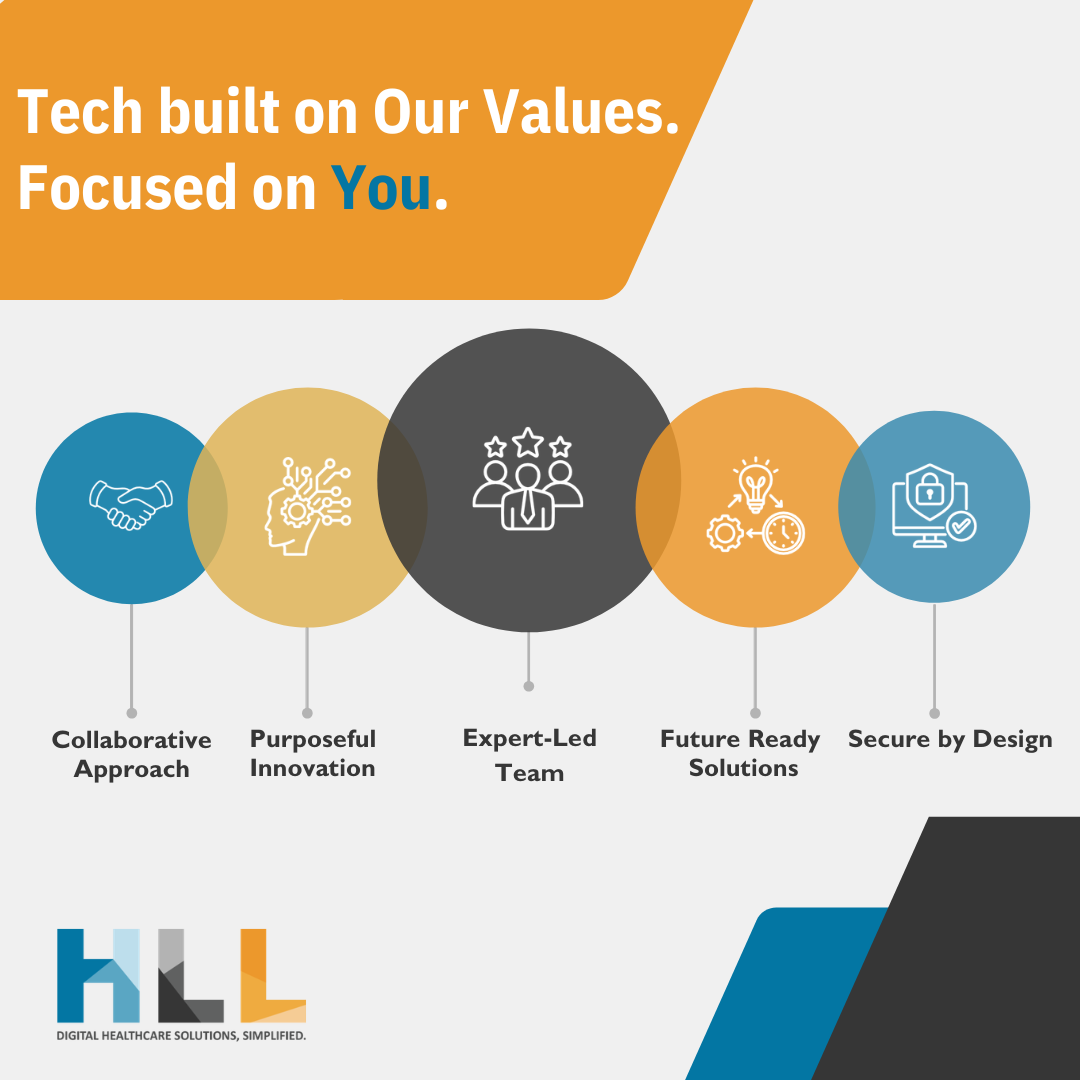
The future of care in Malta will also reflect a broader shift towards preventative and coordinated care, an approach that sits at the heart of HLL's digital health ecosystem. By combining intelligent resident care management, real-time communication, and smart continuous monitoring devices, along with data-driven insights, care providers can identify potential issues earlier, respond more quickly, and make more informed decisions. The result is a more connected care environment where information flows seamlessly between teams. Interventions happen sooner, and residents benefit from safer, more personalised care.
For Malta, the challenge therefore extends beyond adopting new tools. It involves creating an environment where healthcare providers, care organisations, policymakers, and technology partners can work together on governance, interoperability, trust, and long-term planning to support successful digital transformation.
Ultimately, as Malta's elderly population grows, the challenge is also not simply providing more care. It lies in enabling the same care teams to support more residents without sacrificing the personal interactions that define quality care. The demographic changes facing us are clear to see - people are living longer, healthcare needs are becoming more complex, and demand for services is continuing to grow. The question is how Malta chooses to respond.
As Malta prepares for one of the most significant demographic shifts in its history, the organisations that will have the greatest impact are not those delivering more care, but those enabling better, more connected care. For HLL, that means helping build a sustainable healthcare ecosystem where technology empowers care teams while preserving the human relationships at the heart of every care journey.
For more information, visit HLL's website or send an email on: [email protected].
Main Image: