Waste management may not have traditionally dominated boardroom agendas, but in a fast-changing landscape, with technological acceleration, supply chain volatility and regulatory shifts, Maltese businesses increasingly recognise its importance to national competitiveness and are aligning their operations accordingly.
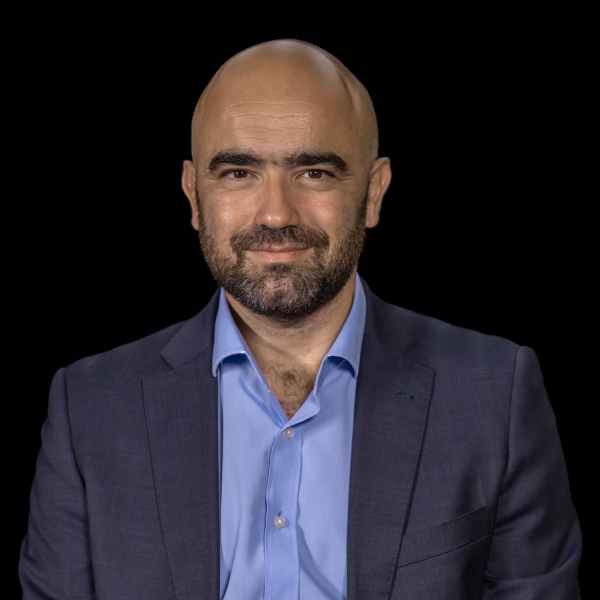
Richard Bilocca, CEO, WasteServ
“When I assumed the role of CEO at WasteServ at the height of the Covid-19 pandemic, the company was still recovering from the destruction of its main recycling plant in Marsaskala due to a devastating fire,” explains WasteServ CEO Richard Bilocca.
Mr Bilocca describes it as a moment of crisis, but also one of opportunity, providing WasteServ with a chance to rethink, rebuild, and lay the foundations for a more modern, stronger, more resilient waste management system.
“Our priority was delivering stability,” he says, so the first step was to set up an interim sorting line to separate recyclables and maintain operations. In parallel, a fully automated Material Recovery Facility was developed to increase efficiency, improve worker conditions and significantly enhance material quality. That facility was then inaugurated in March 2023.
Three months later, a new €20 million facility in Ħal Far was opened, designed to process bulky items such as mattresses, tyres and wood; materials which were traditionally destined for landfill. The momentum continued in June 2024 when an automated glass sorting facility was added, capable of processing 52,000 bottles per hour. The €2.5 million plant employs cutting-edge technology to sort glass by colour, achieving a higher-grade output that is more easily integrated into the circular economy.
However, the one challenge that continued to overshadow all others was landfill capacity.
Historically, the bulk of Malta’s waste – around 95 per cent – was sent to landfill. “We have since reduced that figure to around 75 per cent, but the pressure remains significant,” Mr Bilocca states.
By 2020, less than nine months of available landfill space remained. Expanding onto agricultural land was neither sustainable nor acceptable.
“This urgency became the catalyst for the ECOHIVE Project, a €500 million national investment in modern waste management infrastructure,” Mr Bilocca explains. Its objective is to return valuable materials and green energy to the circular economy and reduce landfilling to below 10 per cent.
Addressing this challenge required a breakthrough in landfill engineering. “We created more than 3.7 million cubic metres of new landfill space through innovative, precise and carefully engineered solutions on our existing landfill footprints,” he says.
One initiative alone tripled residual capacity and generated over 1.2 million cubic metres of new space without expanding the site’s footprint.
Another initiative transformed a shallow 30,000 square metre area landfill into a vertical structure reaching a depth of 55 metres, increasing capacity more than fourfold and offering the potential for future extensions.
At the same time, progress on the ECOHIVE Project continues. “Works will soon start on a new €75 million organic waste processing plant, capable of treating 74,000 tonnes annually, while generating renewable energy and high-quality compost,” Mr Bilocca shares.
Preparatory works for the Waste to Energy facility have been completed, he outlines, with procurement set to begin imminently.
These projects are proof of the commitment shown by households and businesses. “It is truly rewarding to witness nationwide recognition that waste management is a shared responsibility; one that requires the effort of every one of us,” Mr Bilocca posits.
For Mr Bilocca, the results speak for themselves and reflect a cultural shift. “As a country, we have reduced mixed waste by more than 30 per cent, while organic waste separation reached a record 30 million kilogrammes in 2025,” he shares.
The commercial sector’s response, in particular, registered impressive progress last year. “Organic waste collected from businesses rose sharply to approximately 6.5 million kilogrammes in 2025 from just 263,900 kilogrammes in 2022; recyclable waste, including glass, nearly quadrupled in the same period, while mixed waste from the commercial sector registered a modest but meaningful decrease,” Mr Bilocca outlines.
"Malta’s waste sector is no longer defined by landfill dependency. It is transforming, and while challenges remain, our direction is clear. With continued collaboration between the public, businesses and WasteServ, we are laying the foundations for a better, sustainable environment for future generations. We owe this to our children; they want, and deserve, a better environment than the one we inherited,” Mr Bilocca concludes.
Main Image: