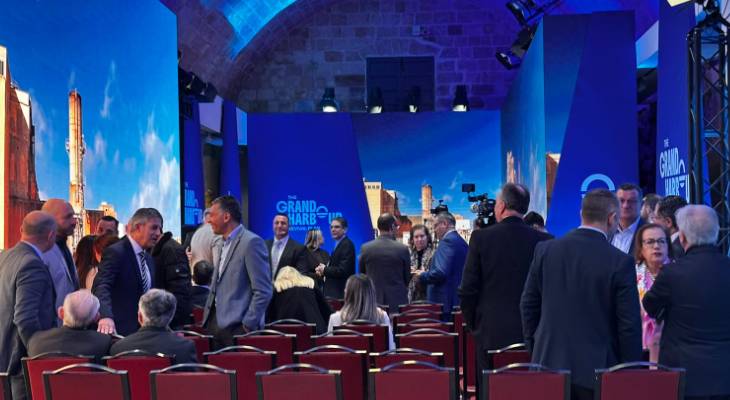
A six-week public consultation has been opened on a long-term regeneration strategy for the Grand Harbour, setting out a four-phase project that would see a number of waterfront and former industrial areas transformed into mixed-use public spaces over the coming years.
Launching the consultation, Robert Abela said the plan aims to reposition parts of the harbour from heavy industrial activity to developments that are accessible to the public, while preserving the area’s maritime and historical character.
The consultation will be followed by a pre-market engagement exercise focused on the first phase of the project, as Government seeks to gauge interest from local and international investors.
The initial phase centres on the Marsa waterfront, including the site of the former Marsa power station, which ceased operations in recent years. Plans for this area include its conversion into a mixed-use zone incorporating cultural venues, recreational areas and service-oriented establishments.
According to the outline proposals, the coastal strip would feature restaurants, offices and a hotel, while building heights along the shoreline would not exceed the level of the existing bastion walls. The restoration of fortifications and historic structures is also envisaged, alongside the conversion of the old customs house for cultural purposes and the redevelopment of the former potato shed into food and retail outlets.
On Jesuit Hill, the concept includes the creation of a new residential area overlooking the harbour.
Government said the masterplan for this phase was prepared by international architecture firm Chapman Taylor, and that the objective is to “open the harbour to the public” through sustainable, contemporary design.
The second phase would focus on Lighters Wharf and Flagstone Wharf, where plans indicate the development of additional waterfront dining areas, a marina and yacht club, and a public square.
The third phase would concentrate on the Deep Water Quay area. Here, proposals include a modernised ferry interchange with catamaran links to Sicily, residential units with harbour views, and the conversion of the existing silo building into a cultural hub surrounded by public space and retail outlets.
The fourth phase would extend into Floriana and the area around the Blata l-Bajda park and ride, with the intention of creating a new park and establishing an improved pedestrian connection to Valletta.
The Prime Minister linked the regeneration vision to other recent interventions around the harbour, including the introduction of shore-to-ship electricity to reduce emissions from berthed vessels and the free maritime transport service connecting Marsamxett Harbour and the Grand Harbour, which has recorded around 1.5 million passenger trips in under a year.
He also referred to the decommissioning of the Marsa power station as a milestone in reducing long-standing environmental pressures in the area.
No cost estimate has yet been published for the project. Government indicated that financing is expected to come primarily from private investment through concession agreements covering buildings and coastal sites that are currently unused.
Following the public consultation period, a pre-market consultation will be launched to assess interest from the private sector, particularly in relation to the Marsa phase.
Chairman of the Grand Harbour Regeneration Corporation, Ryan Fava, said the concept has been designed to complement the harbour’s historic setting while introducing new uses that generate public access and economic activity.
The regeneration plan has been presented as part of the broader Malta 2050 vision, with Government describing it as an effort to attract what it terms “quality investment” centred on sustainability, efficiency and long-term value.
Main Image: