The new Comino Hotel is setting its sights on becoming a model in sustainable hotel design for the Maltese islands, employing systems and processes that will make it a zero carbon hotel, capable of generating and using its own energy.
The project, privately held by HV Hospitality, a subsidiary of Hili Ventures, comprises the new Comino Hotel and Villas. The hotel will feature a central foyer and restaurant, with an underlying basement for an electro-mechanical plant, a spa and 70 hotel rooms with swimming pools at ground floor level and terraces on the upper floors, all laid out on a building gross floor area of circa 6,488 square metres, and an external area of circa 8,064 square metres.
The new villas will consist of a cluster of 21 residences, on a building gross floor area of circa 5,211 square metres.
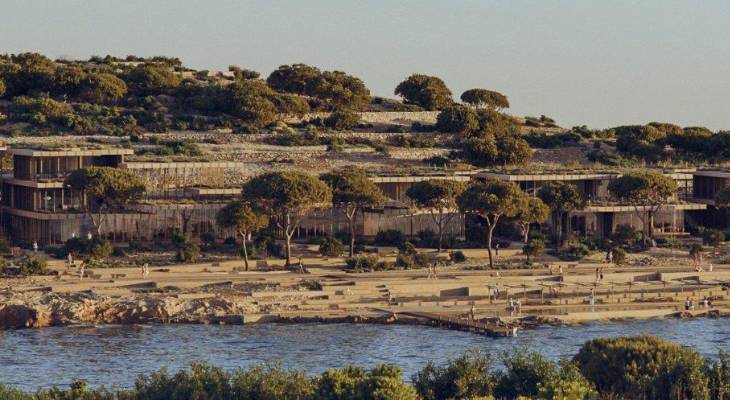
Antonio Belvedere, lead architect of the Comino hotel project, said during a presentation of the project that the site of the Comino Hotel makes up almost 10 per cent of Comino island. “It is a Natura 2000 site and an incredible opportunity to contribute to the architectural debate in Malta,” he said.
“Before you dare to do anything with a project like this, you have to know Malta and Comino, and when I say know Comino I mean know the geology, that it is made up of upper coralline limestone, know the species on the island, the consistency, the texture, what human kind has done on these islands, for agricultural purposes,” Mr Belvedere added. “Sustainability has to drive the design process.”
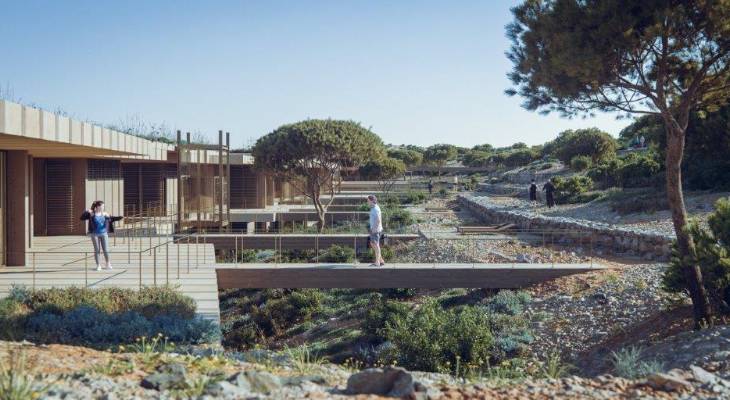
HV Hospitality engaged ARUP, considered a world leader in engineering practices, for this project. The firm’s Director, Andrew Sedgwick, said that before design of the project could commence, they considered all 17 of the UN’s Sustainable Development Goals and how the Comino project will interact with them and influence them in a positive way, given the critical ecological quality of the island and its Natura 2000 status.
“We set nine ambitions for the project – we established net zero carbon operations for the facilities, so on an annual basis, as much energy is generated as is used by the facilities; the site will be fossil free, so no emissions on the island, and if necessary only use of electric vehicles; a major reduction of water usage, water recycling and collection of rain water; and the commitment to treat all sewage on site at a treatment plant, so no effluent goes into the sea,” says Mr Sedgwick.
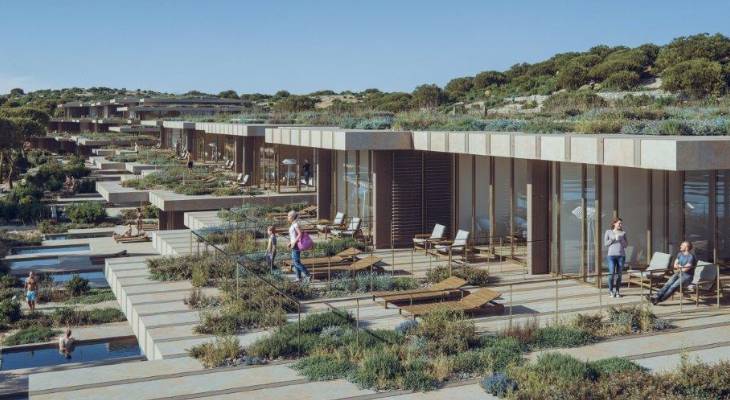
The project also seeks to restore some of the terrain that has been disturbed by previous projects and so bring back biodiversity and help to enhance it beyond the project boundaries.
“We think overall, this will be a showcase of sustainable design and working with nature. Altogether, the ambitions for the project and design of the buildings are on course to achieve the highest possible ratings for environmental certifications. Using LEED’s rating system, by the US Green Building Council, we are on course to achieve platinum status for this project, which is the highest standard,” added Mr Sedgwick.
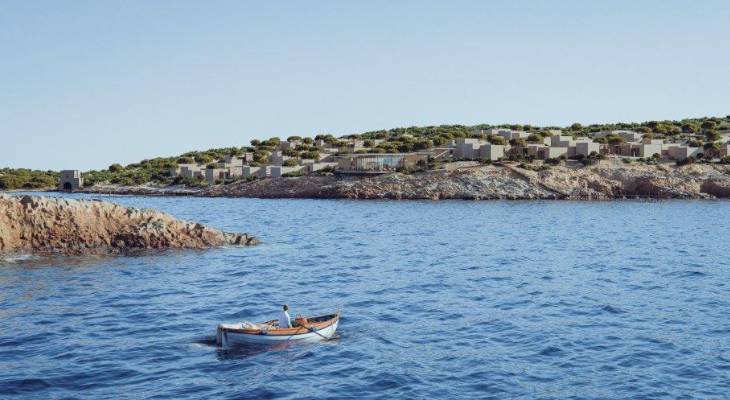
In its ambitions to achieve the ‘zero net carbon’ scheme the project has set out, the strategy for the project combines developing a passive building and using the local forces to produce energy.
“The energy consumption is reduced thanks to the natural cross ventilation, thermal mass and installation of low consumption devices. The objective is to drastically reduce the need to turn on cooling systems. A photovoltaic array will produce a large amount of power while the total need for hot water for sanitary uses will be satisfied by the solar thermal units installed on the roof,” HV Hospitality said.
Demolition and construction of the project is expected to begin by Q3 of 2021, while projections for its completion are 2023. The total investment in the Comino Hotel and Villas is projected to reach between €110 million and €120 million.
Main Image:HV Hospitality