The EU-US trade agreement will give companies on both sides of the Atlantic the clarity and predictability they need, EU Parliament President Roberta Metsola told WhosWho.mt.
Members of the European Parliament on Tuesday (yesterday) gave their final approval on legislation implementing EU tariff commitments as part of a trade deal struck last year with the USA.
On the 27th of July 2025, US President Donald Trump and European Commission President Ursula von der Leyen reached a deal on tariff and trade issues. Under the deal, the EU had agreed to remove import duties on U.S. industrial goods in return for U.S. tariffs of 15 per cent on most EU goods.
But the EU has not yet implemented the cuts on import duty, which prompted US President Trump to threaten higher tariffs if the EU does not take action by the 4th of July.
Yesterday saw another key step towards the deal’s implementation. The EU Parliament voted on legislative proposals that had been proposed by the EU Commission last year aimed at implementing the tariff-related aspects of the agreement. MEPs voted 440 votes in favour to 151 against, with 50 abstentions, to eliminate tariffs on all US industrial goods and provides preferential market access for a wide range of US seafood and agricultural goods.
The proposals were previously agreed by Parliament and Council negotiators, who introduced several elements strengthening the Commission’s original proposal.
This newsroom reached out to EU Parliament President Roberta Metsola and Malta’s MEPs for their reaction to the agreement.
“We said we would deliver for our businesses, and we did. Of course, we would have preferred zero tariffs, but this is not the reality we find ourselves in. This agreement now will give companies on both sides of the Atlantic the clarity and predictability they need,” EU Parliament President Roberta Metsola said.
“This is now a building block in further strengthening our relationship, which remains the most important one we have. There are 16 million reasons why we need each other – 16 million jobs supported by this partnership.”
She said that it is the EU’s most important economic partnership, “the cornerstone for our collective security, and it is a catalyst for research and innovation. I was just in Silicon Valley and the message I had for the business and tech leaders I met was: Europe is open for business.”
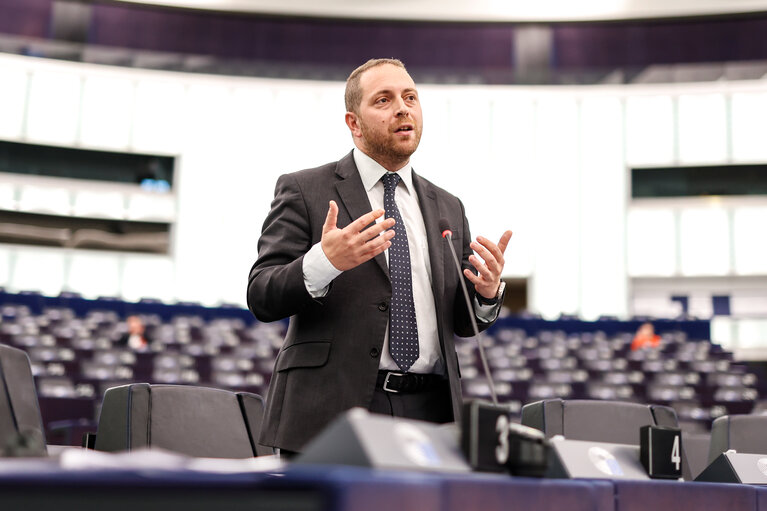
PL MEP Alex Agius Saliba said that the current geo-political situation and the rise in tensions between the EU and the US has put the European Parliament in a critical position to put clear mechanisms in the agreement to safeguard Europe’s interest in case that the US fails to abide by its obligations.
The final agreement reached is a more balanced one protecting European Industries, Workers’ rights and environmental sustainability, he said.
The PL MEP outlined the main achievements of the revised agreement. He mentioned the inclusion of a sunset clause as one example. “All EU concessions automatically expire on 31st December 2029. Any extension will require renewed political approval, with the European Parliament retaining a decisive role.”
He also mentioned the inclusion of a stronger suspension mechanism, where if the United States breaches the agreement, the EU may suspend the arrangement. Another point Dr Agius Saliba mentioned are the steel and aluminium guarantees. “The agreement establishes a clear deadline for the United States to reduce tariffs on steel and aluminium derivative products to 15 per cent by the end of 2026.”
He also pointed to a safeguard clause, that “the EU can take action to protect European industries from harmful import surges originating from the United States.”
Lastly, he said that the legislation explicitly recognises the EU's ability to respond to economic coercion and strengthens its deterrence capacity.
“I would have wished to see more reassurance from the US side when it comes to enforcing EU Digital Acquis. With the continuous threats triggered by the Trump administration in the face of enforcing EU Digital laws, namely Digital Services Act, Digital Markets Act and AI Act, I would have liked to see more reassurances from the US not to attack this important legislation.”

PN MEP David Casa said that while no agreement is perfect, the package “offers a greater degree of stability and predictability for European businesses at a time of significant uncertainty in global trade.”
He too said that the transatlantic relationship remains important, “but we have also become painfully aware of the risks of excessive dependence on a partner whose trade and economic policies shift abruptly and unpredictably. European companies, workers and investors need certainty, and too often they have been forced to adapt to sudden changes originating in Washington.”
Against that backdrop, securing a clearer and more stable framework is in Europe’s interest, he said. “At the same time, this experience underlines the need for the European Union to strengthen its own economic resilience, reduce strategic dependencies where necessary, and ensure that European interests are defended robustly. Our objective should be a constructive relationship with the United States, but it must also be one that is based on reliability, mutual respect and a genuine level playing field.”
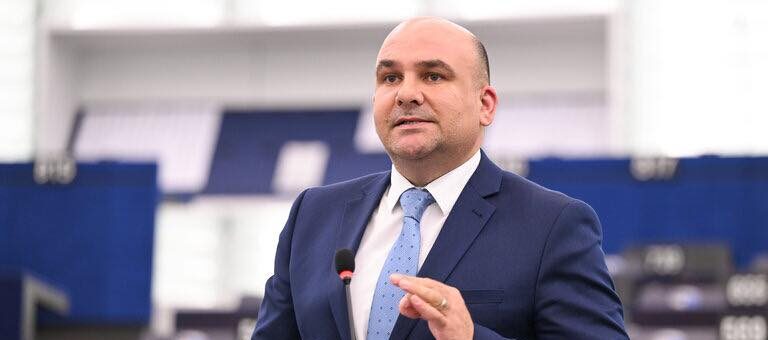
PN MEP Peter Agius also weighed in. Set in the context of the uncertainty created by recent decisions by the Trump administration, he said, the EU is now securing a stable trade environment with longer-term predictability and stability in EU–US economic relations.
“The agreement now ensures continuity in the transatlantic economic partnership, even if the final outcome falls short of some of the EU's initial ambitions and negotiating objectives.” He said that the deal represents a pragmatic compromise that allows both sides to move forward, strengthens economic ties, and creates opportunities for further growth and investment for European businesses.
He too mentioned the safeguards that have been included in the EU legislation to better protect European interests, including the sunset clause and the ability to suspend benefits if the US fails to respect its commitments.
“Taken together, these safeguards make the agreement fairer by ensuring that the concessions are temporary, reviewable, and reversible if they no longer serve the EU's interests.”
He also spoke about the Maltese perspective. “I can’t help but noticing that Malta imports roughly three times more than it exports to the US. This sort of dynamic prompted President Trump to impose tariffs! The stability offered by the agreement now opens an opportunity for Malta especially in view of the recently launched regular US-Malta flights. We can be more ambitious. We need to promote wider trade ambitions with the US for Maltese business.”
Main Image: