For easyJet Engineering Malta, technology has evolved far beyond a background support role – it is now a central driver of efficiency, reliability, and performance. Digital transformation has reshaped the organisation’s day-to-day operations, streamlining internal processes, strengthening collaboration across teams, and enabling faster, data-driven decision-making.
No one is better placed to comment on how technology has transformed the way the engineering operation functions than Waylin Abdilla, Head of Technology and Infrastructure for the organisation. Having begun his career in aviation more than 20 years ago as an IT technician, early on, he transitioned into an ERP (enterprise resource planning) management focused role, which helped build a solid foundation in enterprise systems and business processes. He then took opportunities in Malta, Libya and other Middle Eastern countries, expanding his ERP expertise across multiple sectors including oil and gas, food and beverage, and other large-scale operations. During this period, he managed complex, high-value projects, and completed his MBA.
Mr Abdilla joined SR Technics Malta in 2022, where he was responsible for designing the local IT infrastructure and implementing the necessary hardware to support on-site operations, following after was the ERP implementation. This setup was adapted further following easyJet’s engineering acquisition of the SR Technics Malta maintenance facility in 2024, requiring increased scalability and resilience to support the expanded operation.
Since then, the focus has been on improving efficiency across the business, from investing in analytics and high-availability systems to strengthening security. As Mr Abdilla explains, technology plays a vital role in progress. “We strongly believe technology enables many of our operational improvements,” he says. “Technology is no longer just a support function. It has evolved from a back-office enabler to a core part of operational decision making. It’s shaping how we predict, plan, and perform maintenance every day.”
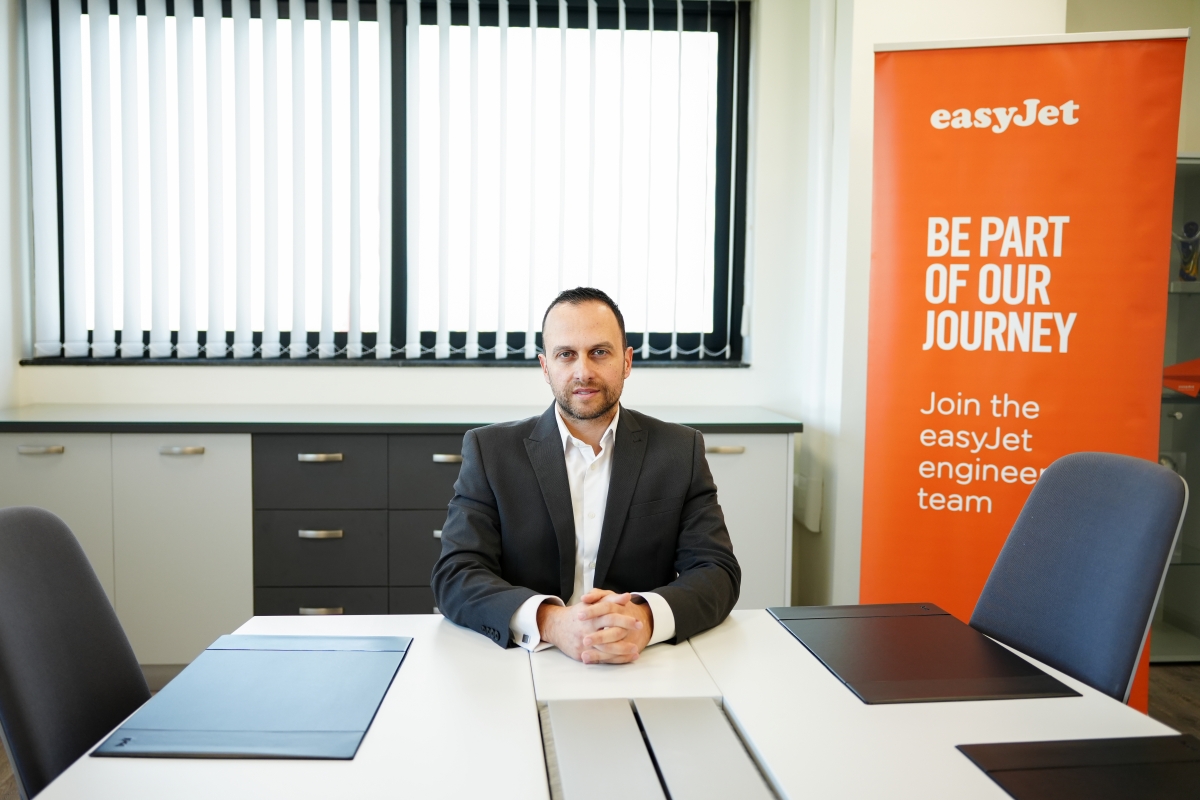
While technology is essential to progress, Mr Abdilla stresses the importance of aligning digital initiatives with business priorities. “Every initiative must have a clear business case with objectives, measurable outcomes, and strong links to operational priorities,” he states. For easyJet Engineering Malta, a key priority is reducing turnaround time (TAT), ensuring aircrafts are serviced as quickly and effectively as possible, maintaining the highest safety and quality standard, to enable a prompt return to service without any delay.
The easyJet airline is already embracing several digital solutions, including Artificial Intelligence (AI) to support predictive maintenance, enabling teams to detect potential issues before failures occur. This allows aircraft to be proactively routed to locations where the necessary manpower and materials are available, ensuring maintenance work is carried out efficiently and with minimal disruption. Once resolved, aircraft can quickly return to service, transporting satisfied customers across the network.
Following the same digital-first approach, easyJet Engineering Malta is also advancing its technological capabilities through targeted digital initiatives. One ongoing development of particular importance to Mr Abdilla is the digital job card system. Employees who currently rely on paper-based documentation will eventually be equipped with tablets to track and record their work electronically once system is launched. While simple in concept, the initiative has significant operational impact. “This will substantially improve cost efficiency by eliminating thousands of printed A4 pages per season, reducing printing costs, waste management and storage requirements,” Mr Abdilla explains. “It will also allow our employees to focus more on core maintenance activities.”
The system is still in its trial phase, but Mr Abdilla envisions it having a substantial impact in the future. Instead of entering notes manually, employees would have the option to record information by voice, take pictures, access aircraft manuals faster, all this contributes to saving time and reducing administrative effort. Plans for the system are ambitious, with the possibility of having a material and tooling ordering system akin to a takeaway service. “Instead of leaving their workspace, employees will order material and tools through their tablets, and they will be delivered by mobile robots closer to the working area,” Mr Abdilla states. “Focusing on removing any waste of time spent walking to collect tools or material.”
Ultimately, easyJet Engineering Malta’s approach demonstrates how technology, when aligned closely with operational priorities, can deliver tangible results. By embedding digital tools into everyday workflows – paperless job cards - the organisation is creating a more proactive, efficient and data-driven way of working.
As Mr Abdilla makes clear, this transformation is not about technology for its own sake, but about enabling employees to work smarter, reduce waste and continuously improve performance in an increasingly demanding aviation environment.
Main Image: