Maltese writer and genealogist John Edward DeMicoli has defended the integrity of his award-winning short story The Bastion’s Shadow, arguing that documentary evidence of its development carries far greater weight than the results of AI-detection software.
His comments to WhosWho.mt come after the Commonwealth Foundation concluded a month-long review into allegations that some of the winning entries in the 2026 Commonwealth Short Story Prize may have been generated using artificial intelligence.
On Monday (yesterday), the Commonwealth Foundation announced that it had found no evidence that AI was used to write any of the regional winning stories, including Mr DeMicoli’s entry, which earned him the Canada and Europe regional title earlier this year and made him the first Maltese writer to receive the honour.
“The issue is not what a detector thinks. The issue is what the evidence shows,” Mr DeMicoli told WhosWho.mt.
“The story was judged on the original manuscript submitted to the Commonwealth Short Story Prize, not on a later edited publication. Drafts, handwritten notes, and revisions speak far more clearly about authorship than software-generated scores on a subsequently edited text.”
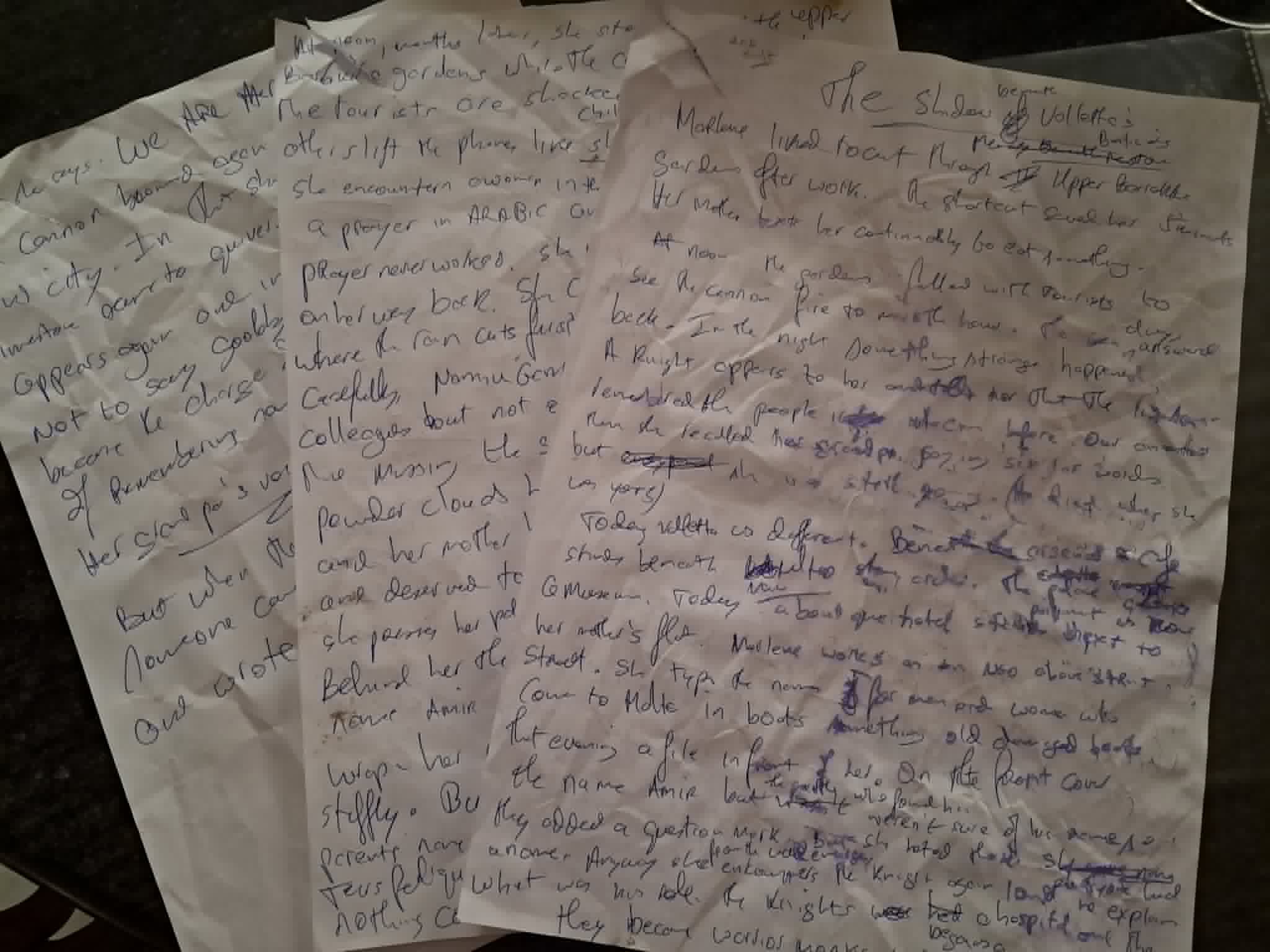
Photos shared with this newsroom show the earlier stages of the short story
The controversy emerged after online commentators used AI-detection tools to analyse published versions of several regional winning stories. The Bastion’s Shadow, alongside winning entries from Trinidad and Tobago and India, became the subject of scrutiny after some software tools suggested the texts may have been AI-generated.
However, Mr DeMicoli argued that the allegations were based on the wrong material.
“The allegations circulated by anonymous online accounts were based on analysis of the later published version rather than the manuscript assessed by the judges,” he said.
According to the author, the Commonwealth Foundation reviewed extensive evidence documenting the development of the story, including handwritten notes, drafts, revisions and planning material.
“The documentary record also includes earlier published writings dating back to 2010, some of which contain historical descriptions, themes and research later incorporated into the story,” he explained.
“In several instances, passages in The Bastion’s Shadow can be traced directly, and in some cases verbatim, to those earlier sources.”
Mr DeMicoli noted that, like most published literary works, the story underwent editorial revisions before publication.
“These revisions included grammatical corrections, restructuring, rewritten passages, and explanatory additions,” he said.
“In these circumstances, it was inappropriate to have drawn firm conclusions about authorship from software-generated assessments of the published text, particularly where material revised or introduced during the editorial process was itself identified as AI-generated, which should tell us what we need to know.”
The Commonwealth Foundation said it had spent the past month investigating the allegations and reviewing evidence supplied by the writers. The organisation stated that it held detailed discussions with all regional winners and examined working drafts, time-stamped documents and notes before reaching its conclusion.
“After a thorough consultation with our judges and careful consideration of all available information, we are satisfied that AI was not used to write the winning stories,” the foundation said in a statement issued by Director General Razmi Farook.
The foundation added that each winning story had been read by at least seven people through multiple rounds of judging and that the regional winners would remain unchanged.
The organisation also acknowledged that the controversy had highlighted the challenges facing literary prizes in the age of generative AI and said it has begun discussions on how originality and authenticity can be assessed in future competitions.
For his part, Mr DeMicoli said he was satisfied with how the matter had been handled.
“Most importantly, the Commonwealth Foundation had access to the relevant material, conducted its own review, and chose to stand by its decision,” he said.
“I have taken these allegations in stride and remain grateful to the Commonwealth Foundation for its professionalism and support throughout this process.”
“My focus remains on the work itself, and I am proud that Malta will be represented at the Commonwealth Short Story Prize Awards Ceremony on 30 June.”
The overall winner of the 2026 Commonwealth Short Story Prize will be announced on 30th June.
Main Image: