The latest ‘After Sunset’ event, organised by the Planning Authority in collaboration with the Kamra tal-Periti and SACES is part of a series of Architecture and Design talks. International award-winning American firm Skidmore, Owings & Merrill (SOM) were invited to share their project experiences and pioneering approach to sustainable architecture.
In the spotlight were Design Partner and Architect Kent Jackson and, Perit and Structural Engineer Karl Micallef, eminent figures from SOM, who imparted thought-provoking insights on adaptive reuse, and the metamorphosis of historical structures into sustainable buildings.
Preserving the past for a more balanced future
Oliver Magro, the Executive Chairman of the Planning Authority, took the podium to inaugurate the evening.
In his short address, he explored the delicate balance of blending the old with the new, aligning architectural gems with the ever-evolving needs of communities, and the responsibility of custodians to safeguard identity, history, and culture.
Mr Magro stressed that one should not perceive older buildings merely as relics, as retro fitting these kinds of buildings is environmentally friendly and opens new avenues for new businesses, as well as new ways to ensure a sustainable future.
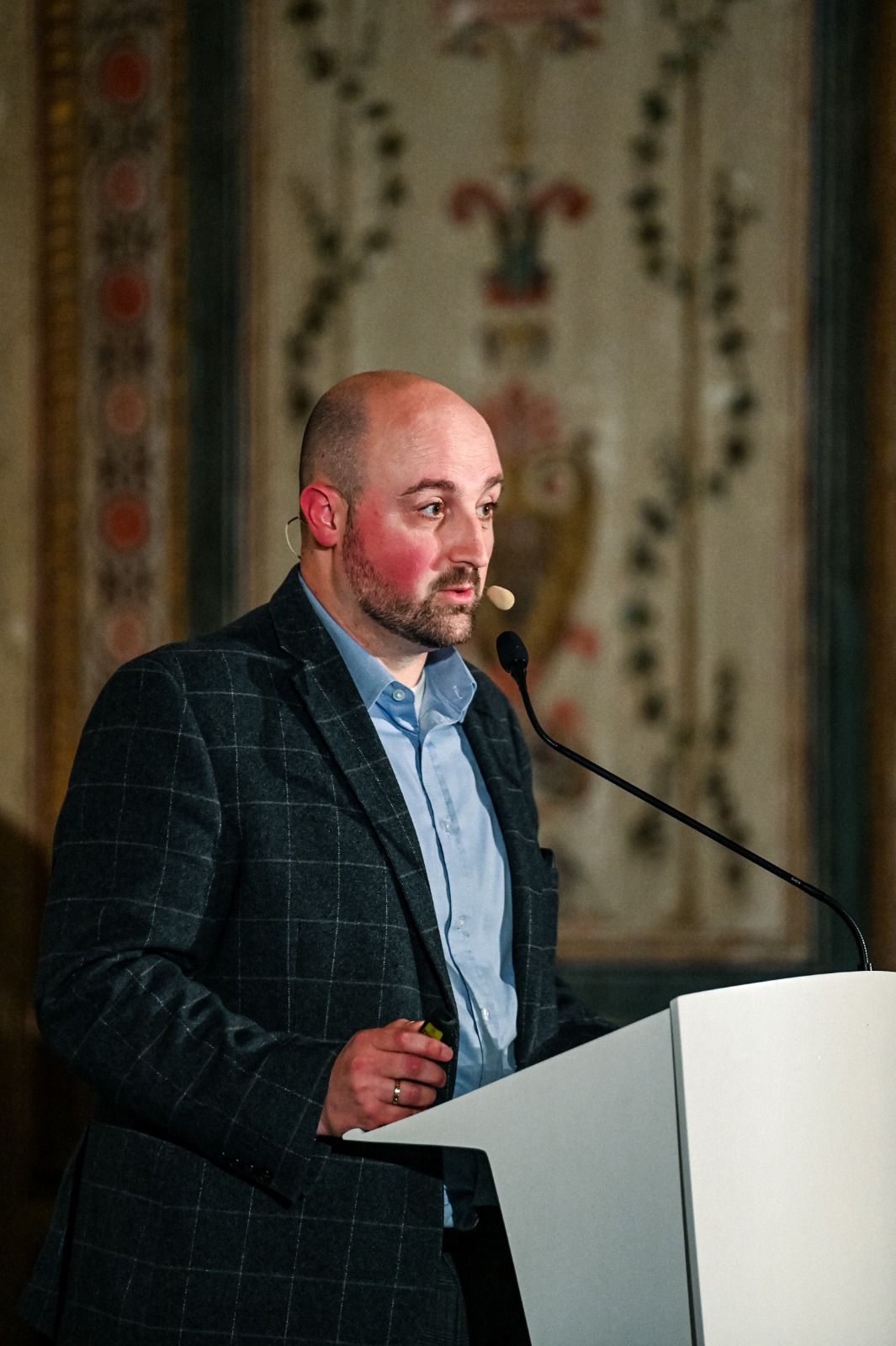
Karl Micallef, Structural Engineer and Perit
The multifaceted nature of sustainability
Following Mr Magro's opening, Andre Pizzuto, the President of the Kamra tal-Periti, took to the stage. He said that, although the term ‘adaptive reuse’ is one of the main areas of debate at EU level, locally it has not yet reached the centrality of debates.
He urged the audience to broaden their understanding, asserting that sustainability extends beyond carbon and climate change to encompass dimensions such as diversity, gender, and the intrinsic quality of beauty.
From modernism to sustainable innovation
Kent Jackson, the Design Partner and Architect at SOM embarked on a captivating journey through the firm’s history, tracing the evolution from the definition of modernism in 1952 to their contemporary commitment to solving global challenges.
As governments convene for COP 28 to address the pressing issues of our planet's health, he emphasised the urgency for swift, scalable change.
Architect Jackson posed a provocative question: Can our buildings mimic the carbon-absorbing function of forests? Acknowledging that cities occupy only three percent of the earth but contribute to seventy-five percent of emissions, he challenged the audience to view cities as ecosystems and individual buildings as trees.
To illustrate this concept, SOM has embarked on a mission to make high-rises not just carbon-neutral but carbon-negative, utilising alternative materials like bamboo and promoting a shift from additive to reductive design.
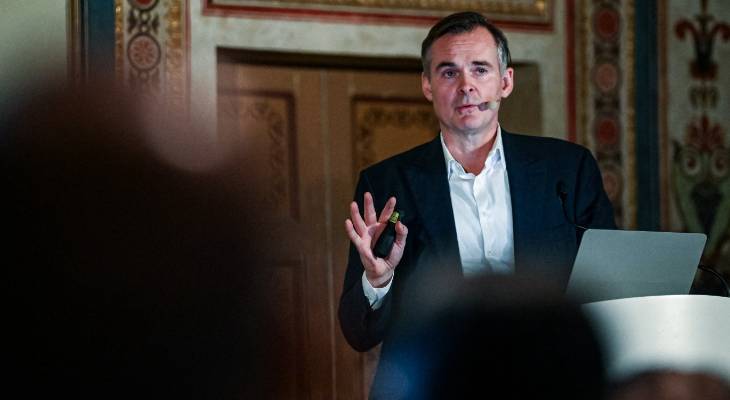
Kent Jackson, Design Partner and Architect
The focus is on making every building environmentally responsible and adaptable, leaving no room for excuses, he stated. Key initiatives include incorporating green outdoor spaces, promoting biodiversity, and embracing biophilia – the innate connection between humans and nature.
Additionally, SOM integrates solar panels for energy generation and employs energy-efficient glass facades to reduce operational energy.
Architect Jackson's vision extends to retrofitting existing buildings, proving that sustainability is achievable with existing technologies. By reimagining the structural system and reducing interior layers, SOM aims to set a new standard for eco-friendly architecture, extending the lifespan of structures while minimising their carbon footprint.
SOM's commitment to sustainability goes beyond rhetoric; the firm has made itself a carbon-neutral business, with projects scattered across the globe and no centralised headquarters.
Adaptive reuse
SOM Structural Engineer Karl Micallef presented tangible examples of adaptive reuse and sustainable design.
From the iconic Lever House in New York to the transformation of the decaying Cook County Hospital in Chicago into a high-end hotel, he unveiled the potential inherent in repurposing existing structures.
Moving from grand structures to smaller ones, the Optimo Hat Factory in Chicago emerged from the adaptive reuse of a fire station. This not only breathed new life into the building but also generated income, exemplifying the economic sustainability of projects such as these.
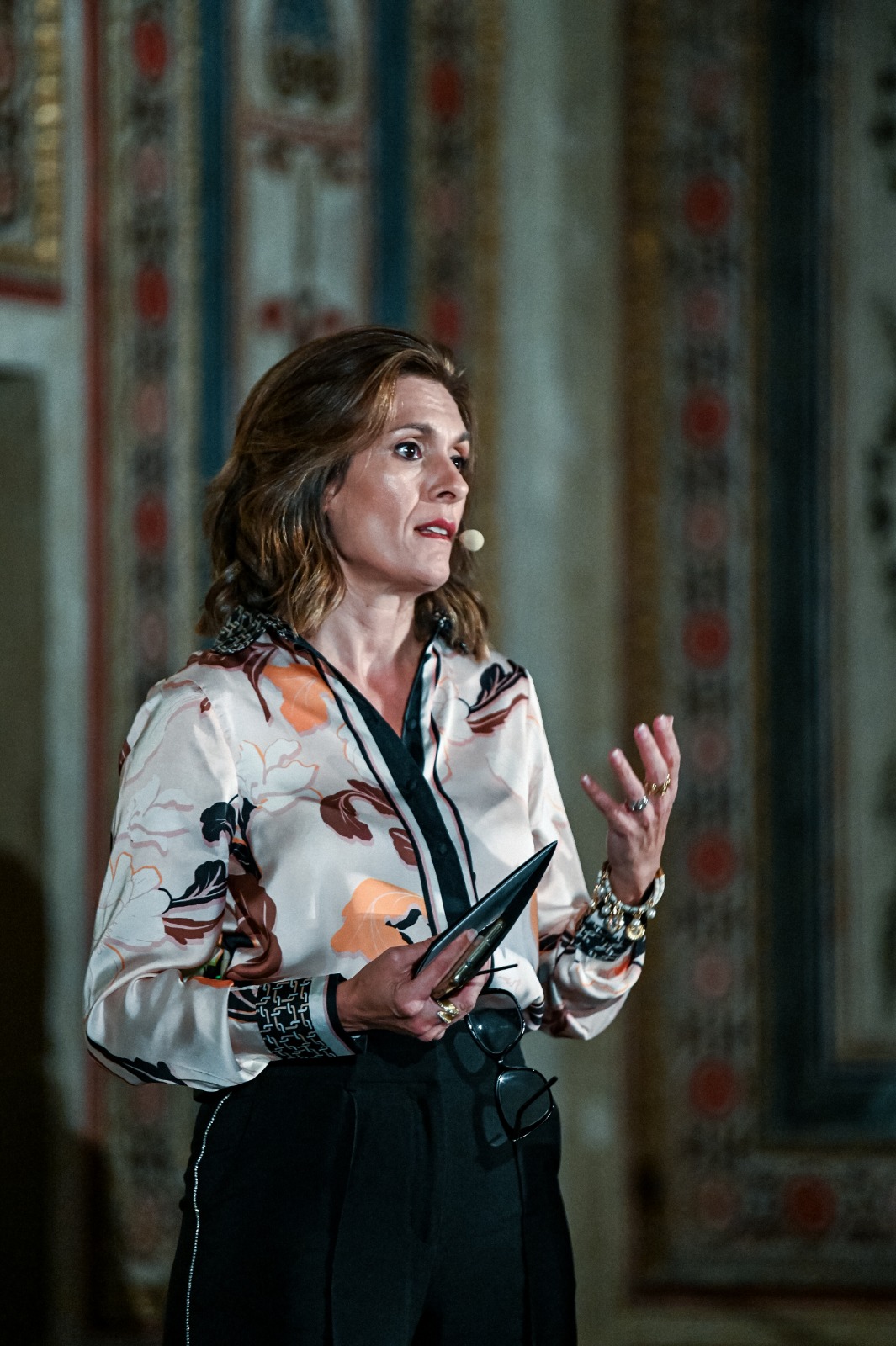
Dorianne Cachia, Perit and moderator of the panel discussion
Perit Micallef's own journey with SOM began with the United Nations campus in Geneva, his inaugural project. Revamping a historic fabric without compromising its essence, the team created a sustainable and efficient building, integrating timber and precast concrete for a harmonious connection with the landscape.
The concept of adaptive reuse is not a novel one, Perit Micallef pointed out, citing historical examples such as the metamorphosis of Valletta from a fortress to an open-air museum. However, the focus shifts to ordinary buildings, prompting the question of how to approach smaller projects sustainably.
In a world where change is constant, Perit Micallef envisions sustainable architecture as a gift to future generations. His philosophy revolves around making buildings future-proof and adaptable, ensuring that they evolve with the needs of society while preserving their intrinsic value.
The event also saw an engaging Q&A session, exploring the coexistence of innovation, cultural heritage, and sustainability.
For more information visit here
Main Image: