The National Council of the Maltese Language has been effectively non-operational for the past 18 months, raising concerns among academics, language professionals and student representatives about the long-term impact on the development, standardisation and digital future of Maltese.
The council, which is legally tasked with overseeing the Maltese language and updating its orthography, has remained without a chair since the resignation of Linguist and Professor Olvin Vella in November 2024. Although a temporary replacement was appointed briefly, the role has largely remained vacant, leaving the council unable to function as intended.
The situation has been compounded by the recent resignation of executive director Thomas Pace, further weakening the institution’s operational capacity at a time when Malta’s linguistic landscape is evolving rapidly.
‘We stand to lose a great deal’
Speaking to WhosWho.mt, a source within the Maltese language field, who requested anonymity, stressed that the council’s inactivity represents more than an administrative lapse.
“The National Council of the Maltese Language was a point of reference for many other professionals,” they said. “Without it, we stand to lose a great deal, whether in updating orthography, education, or resources, including digital ones.”
They highlighted that the council’s strength historically lay in its composition, bringing together academics, educators and NGO representatives, rather than relying on a single decision-maker.
“In today’s context, where things are changing so rapidly, not having a council to keep our language up to date will set us back significantly,” they added.
Orthography delays and digital risks
Similar concerns were echoed by interpreter and Maltese language content creator Kurt Gabriel Meli, who described the council’s inactivity as “a massive shame”, particularly given its previous track record.
“The last two major language reforms were conducted expertly, demonstrating the council’s talent and potential,” he said. “Its inactivity will delay further standardisation in orthography.”
However, he noted that the immediate impact on education and online usage may be more limited, arguing that the language continues to evolve organically in these areas. Instead, he pointed to a broader structural issue.
“The biggest shame is that large-scale digital projects such as dictionaries, thesauruses and spell-checkers have been left to third parties or enthusiasts,” he said. “While some have succeeded, others have not.”
He added that, once properly resourced, the council should prioritise expanding its digital presence and engaging younger audiences more effectively.
‘A failure of linguistic stewardship’
The Għaqda tal-Malti – Università took a more critical stance, warning that the absence of an active national authority risks undermining the language’s consistency and credibility.
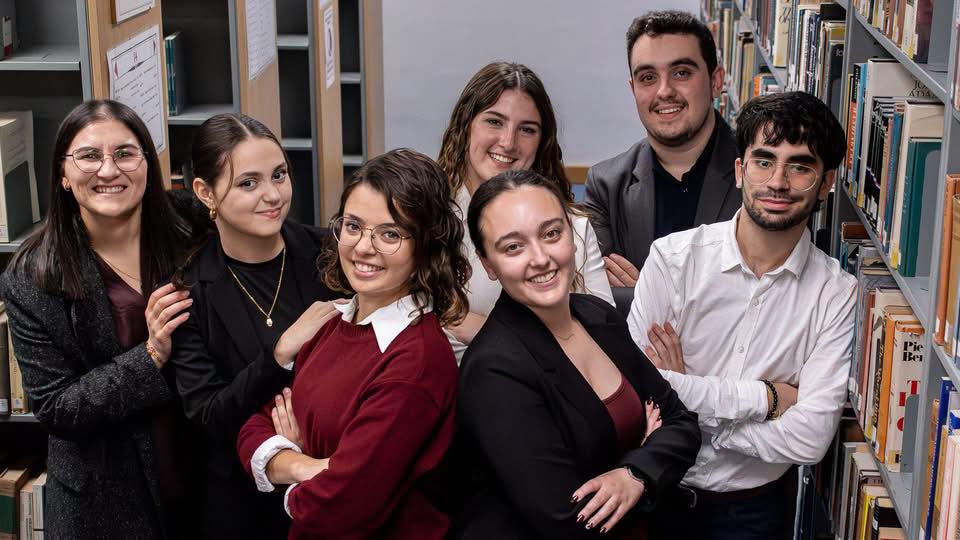
The current Għaqda tal-Malti – Università committee / Facebook
“Language does not pause while institutions remain idle,” the organisation said in comments to WhosWho.mt. “If the council has not functioned for 18 months, Maltese has effectively been left without the authority responsible for guiding its development.”
The group emphasised that the consequences are already being felt in orthography, where the council is legally responsible for establishing correct usage, particularly for words entering Maltese from other languages.
“When that authority is absent, uncertainty spreads into everyday use,” they said, pointing to the knock-on effects for teachers, editors, journalists and publishers.
In education, this lack of clarity risks creating inconsistencies in teaching and assessment, while in the digital sphere the implications are even more pronounced.
“A small state language like Maltese cannot afford institutional inactivity in areas such as spellcheckers, machine translation and AI systems,” the organisation said. “Standardisation is the foundation on which digital usability is built.”
They warned that prolonged inactivity could normalise inconsistency and make it harder to ensure Maltese remains fully functional and relevant in a modern, multilingual environment.
Tensions with the Centre of the Maltese Language
Beyond the council’s inactivity, concerns have also been raised about its relationship with the Centre of the Maltese Language, which was established to serve as its administrative and operational arm.
According to the anonymous source, the creation of the Centre marked a turning point.
“Since the Centre came into effect, the council has suffered a great setback,” they said. “The Centre was given considerable resources, especially financial ones, while the council never received funding of that kind.”
They argued that what was intended to function as the council’s “right arm” effectively became a separate entity, ultimately hindering the council’s work.
“There was never a balance between the two,” they said, calling for a clearer division of roles where the council leads language planning and the Centre focuses on implementation.
Mr Meli, while less definitive, also raised concerns about potential fragmentation.
“I fear that having both a council and a centre may result in a lack of coordination,” he said. “I still question the need to create a separate Centre rather than strengthening the existing structures of the council.”
The student organisation echoed these concerns, describing the relationship as “weak and in need of significant improvement”.
“With the council inactive, responsibilities appear unclear or not fully carried out,” they said. “This creates a gap in national language planning at a time when strong coordination is needed.”
They also pointed to early tensions surrounding the Centre’s establishment, including concerns over appointments and consultation, as factors that may have strained relations from the outset.
Governance and control
On the question of whether recent developments signal a shift towards greater government control over language policy, views remain mixed.
The anonymous source suggested that the method of appointing leadership roles may point in that direction.
“While the council’s chairperson was traditionally chosen by language institutions and professionals, the CEO of the Centre is politically appointed,” they said. “That alone speaks volumes.”
They cautioned that if language decisions were to become politically driven, it would raise serious concerns about the independence of language planning.
Mr Meli, however, rejected the notion of increased government control, instead pointing to a lack of engagement.
“I do not have that impression,” he said. “If anything, it seems that the government is not particularly invested in language policy. This work should be left to the council and its experts.”
The student organisation adopted a more neutral position, framing the current situation as one of institutional difficulty rather than deliberate policy direction.
“These developments suggest a period of transition and organisational challenges rather than a clear attempt to centralise authority,” they said, adding that any temporary shifts in responsibility are likely pragmatic rather than strategic.
Calls for reform and resources
Despite differing interpretations, all three sources converged on the need for reform, improved coordination and increased investment.
The anonymous source called for a fundamental reassessment of the relationship between the council and the Centre, stressing that they should be complementary rather than overlapping entities.
Mr Meli highlighted the importance of expanding digital initiatives and ensuring the council has the tools to lead large-scale language projects.
Meanwhile, the student organisation emphasised the need for stronger institutional structures, clearer communication and adequate funding and human resources.
“If the council cannot be reactivated and made to function effectively, serious consideration must be given to replacing it with a structure that can genuinely safeguard and develop the Maltese language,” they said.
As Malta continues to navigate an increasingly multilingual and digital environment, the prolonged inactivity of its primary language authority is raising fundamental questions about governance, priorities and the future of the Maltese language itself.
Main Image: