The ISPORT training programme is being expanded to provide sporting and coaching opportunities to more children and young people with physical and visual impairments.
The initiative, established four years ago through a collaboration between The Malta Trust Foundation and the Malta Paralympic Committee, initially focused on children with visual impairments.
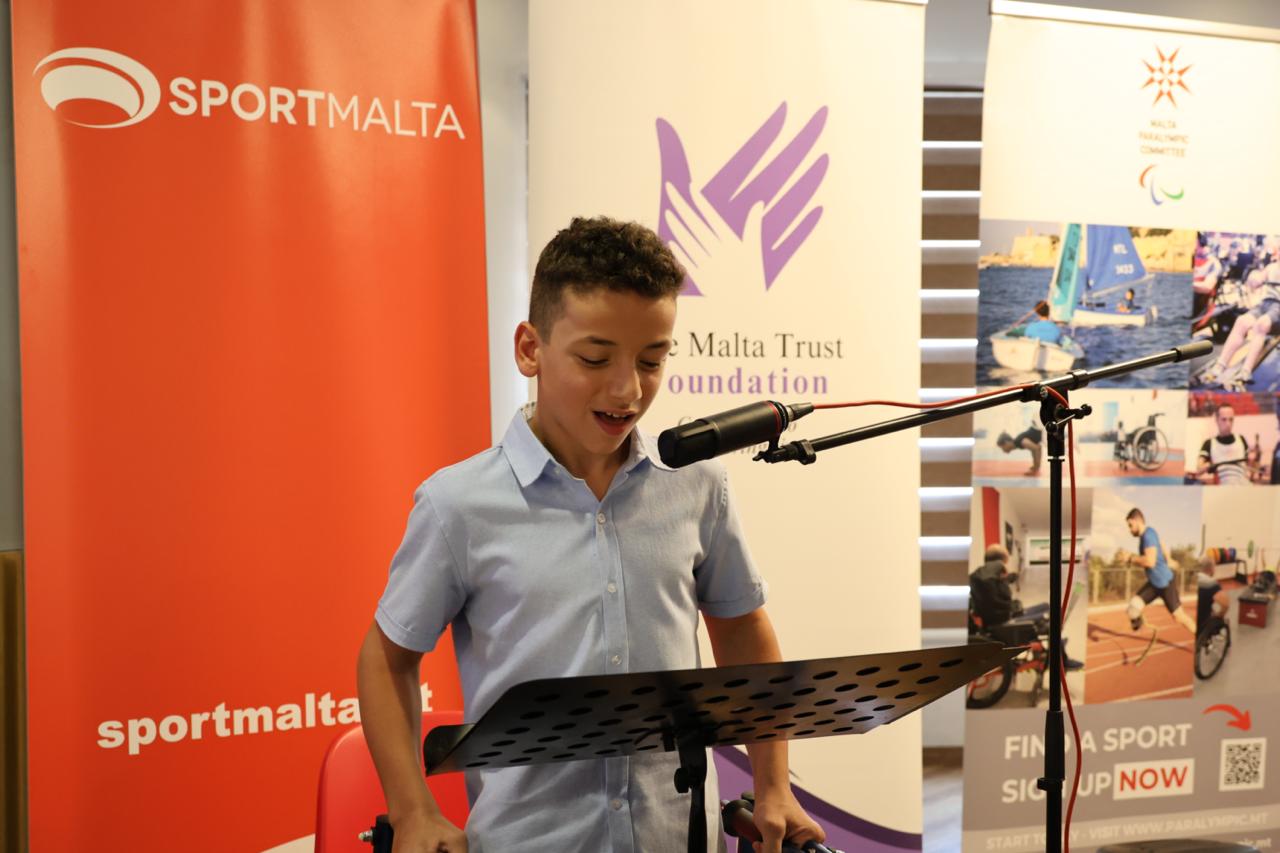
Julian, a young boy with different abilities, presented the programme
Under a renewed agreement between the two organisations, the programme will now operate as ISPORT+, widening its scope to include young people with physical disabilities who may face barriers to participating fully in mainstream sporting activities.
Marie-Louise Coleiro Preca, founder and chair of The Malta Trust Foundation, said the expanded programme aims to reach as many children and young people as possible while helping participants discover their abilities through sport.
“Over the past four years, we have created valuable sports opportunities for children and young people with visual impairments, and the confidence, happiness, and sense of achievement they have gained are our greatest reward,” she said.
Ms Coleiro Preca added that the foundation hopes some participants could eventually develop into Malta’s future para-athletes.
Since its launch, ISPORT has developed a network involving young athletes, coaches, sports clubs and families. International collaborations, particularly with Italy’s Federazione Italiana Nuoto Paralimpico (FINP), have also provided Maltese athletes with access to visiting international coaches, specialised training and skills development workshops.
Malta Paralympic Committee general secretary Julian Bajada said the continued development of coaches will be among the programme’s strategic priorities, with the aim of ensuring athletes receive training tailored to their individual needs.
“ISPORT+ is a fantastic opportunity for children and young people with physical or visual impairments to become involved in sport and physical activity, and to participate meaningfully and fully in society,” Dr Bajada said.
He added that the programme extends beyond sporting participation by encouraging independent living, lifelong social skills and community building.
Main Image: