German filmmaker and art historian Grit Lederer has turned her lens on Valletta for a documentary exploring the Maltese capital’s status as a UNESCO World Heritage Site, examining how centuries of history coexist with the pressures of tourism, development and modern city life.
Ms Lederer, whose previous documentary work includes Nefertiti: Who Does She Belong To?, Botticelli and The Genius of Gothic Art, first encountered Malta around two decades ago – an experience she says left a lasting impression.
“I first visited Malta some twenty years ago, and the archipelago made such a lasting impression on me that I always hoped I might one day make a film there,” she tells WhosWho.mt.
When the opportunity eventually arose to propose a project examining what it means for a city to be recognised as a UNESCO World Heritage Site in the present day, she says Valletta was the natural choice.
“Valletta is an exceptionally concentrated place,” Ms Lederer says.
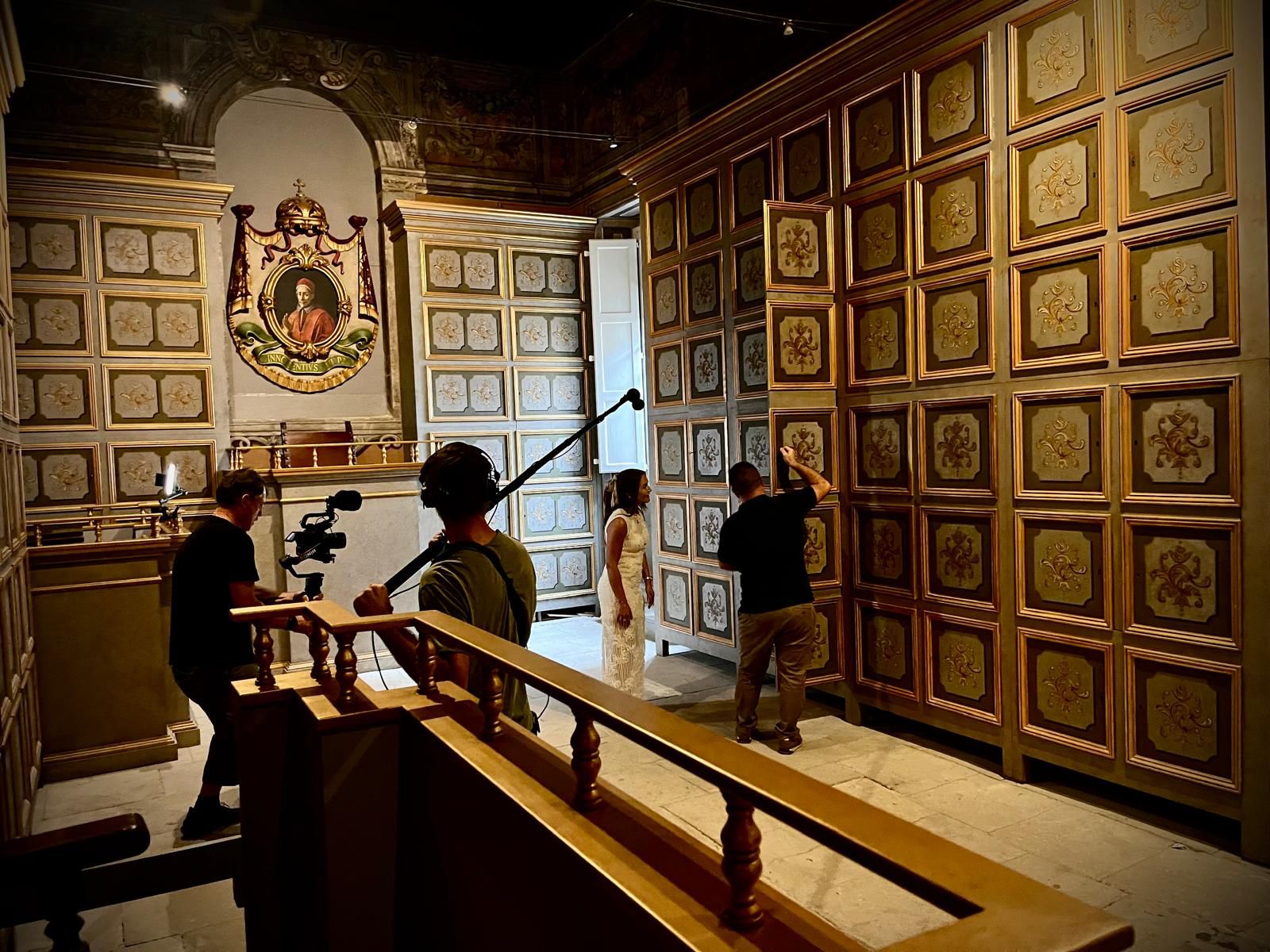
A picture taken during the filming of the documentary
As an art historian and filmmaker specialising in historical subjects for European cultural channel ARTE, she was particularly drawn to the different historical influences found within the capital.
“I am deeply fascinated by the way centuries of European, Mediterranean and North African history converge within such a small area,” she explains.
For Ms Lederer, Valletta's history is not something confined to museums or monuments, but remains visible in the way the city functions today.
“Valletta is a city in which history is not simply preserved; it continues to shape everyday life – through the fortifications of the Order of St John, its auberges, churches and magnificent harbours.”
The documentary benefits from access to buildings associated with the Knights of Malta and traces Valletta’s development from a fortified city into a cultural heritage site of international significance.
It also brings together historians, urban planners and artists to consider the relationship between the capital’s heritage, tourism and property market, as well as the challenges involved in preserving Valletta for future generations.
Ms Lederer says she was interested in going beyond Valletta’s architectural splendour and UNESCO designation to examine the people who continue to live in and shape the capital.
“I wanted to ask who lives in Valletta today, who cares for this extraordinary city, and how it is being shaped for the future amid all the challenges that entails,” she says.
“What particularly attracted me was the possibility of portraying Valletta not merely as a splendid UNESCO World Heritage Site, but as a living place where past, present and future are constantly being negotiated between history, economic pressures and tourism.”
Malta’s layered identity
While filming the documentary, Ms Lederer says one aspect of Malta that particularly surprised her was the complexity of the country's identity.
Malta, she notes, is frequently viewed internationally through the legacy of the Knights of St John, its period under British rule and its fortifications. However, she wanted the documentary to also explore the country's longstanding connections with the Arab world.
“What surprised me most was the extraordinary complexity of Maltese identity,” she says.
“I wanted the film to show how profound the island’s connections with the Arab world are – most visibly in the Maltese language, which preserves an important legacy of that history.”
She credits the Maltese experts and protagonists who participated in the production with helping communicate the different layers that have shaped the country.
“The remarkable experts and protagonists whom I had the privilege of meeting in Malta, without exception very knowledgeable and wonderfully generous, conveyed this layered identity with great clarity,” she says.
For Ms Lederer, it is precisely this combination of historical influences and the way they continue to be reflected in contemporary Malta that makes the country compelling.
“This is what makes Malta such a fascinating place today: an island whose history is by no means concluded, but remains vividly present in its culture, architecture and sense of self – and is kept alive by its people.”